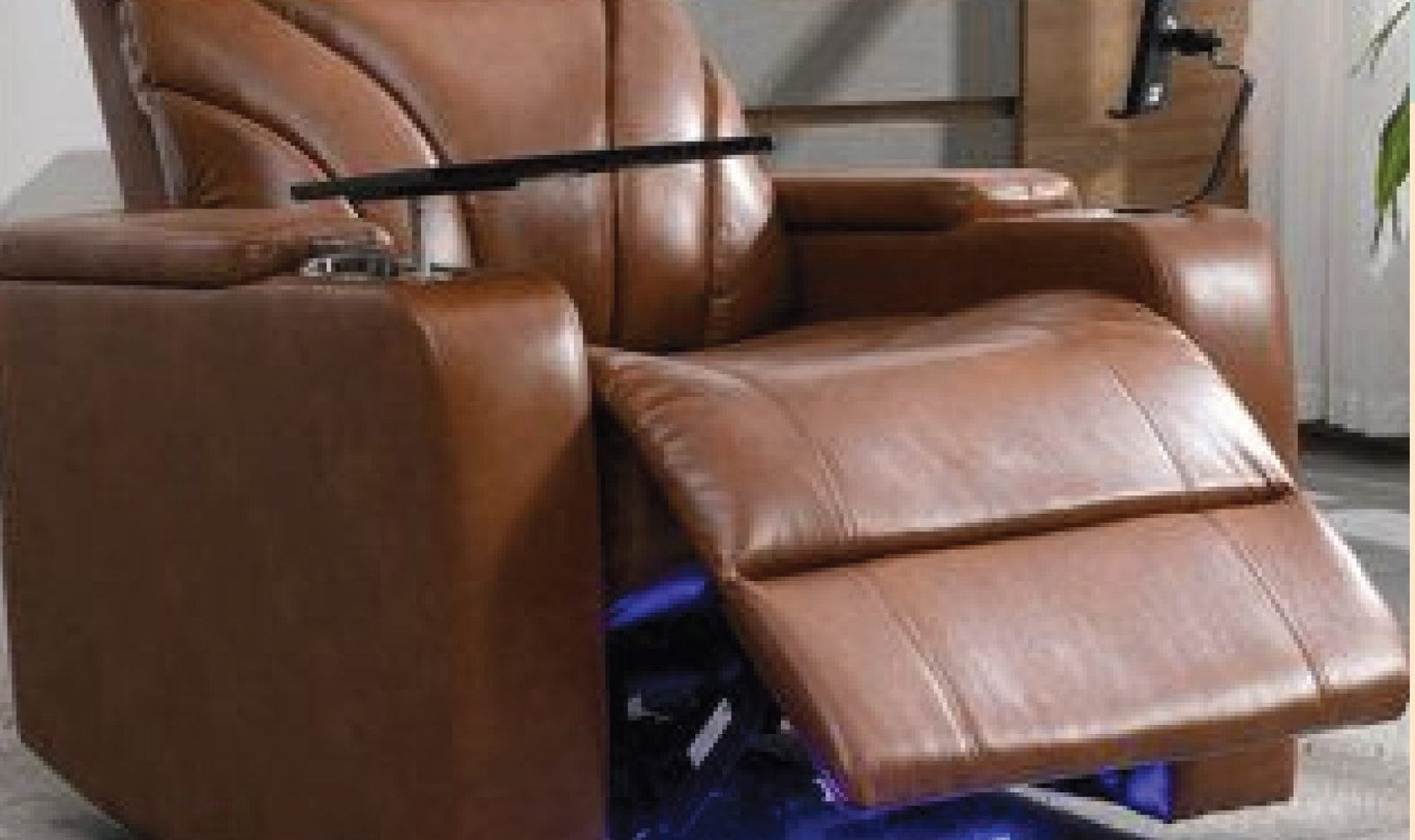
A recliner is worth it if someone will actually recline in it most days. It is a poor buy if it is mainly for guests. That sounds obvious, and it is still the mistake we see most often.
The reason is simple: with a recliner you are not buying a sofa, you are buying a mechanism wrapped in a sofa. Cost, clearance, lifespan and repairability all follow from that one fact. We build these in Cherlapalli and we repair them, so here is the honest version.
The three types, and what they cost you
| Type | How it works | Strengths | Weaknesses |
|---|---|---|---|
| Manual lever | Side handle releases the footrest | Cheapest; least to fail; easy to repair | Needs a firm pull; awkward for older users |
| Manual push-back | You lean back; body weight does it | No lever; cleaner lines | Needs real clearance behind; hard to fine-tune |
| Motorised | Button or remote drives an actuator | Effortless; infinite positions; best for limited mobility | Costliest; needs a power point; motor can fail |
| Zero-wall | Glides forward as it opens | Needs only 5-10 cm behind | More complex mechanism; costs more |
Most people should start by asking who uses it. If the honest answer is a parent or grandparent with knee or back trouble, motorised is worth the money and the rest of this is secondary. If it is for watching cricket twice a week, a manual lever will do everything you need for a fraction of the cost and a fraction of the risk.
The space nobody budgets for
This is where recliners catch people out, and it is the single most common regret.
A recliner needs clearance behind it to tilt, and clearance in front for the footrest. Standard recliners need 30-45 cm of wall gap. People measure the width, confirm it fits the wall, push it flat against the wall — and then it will not open.
| Gap needed behind | Footrest extends forward | |
|---|---|---|
| Standard recliner | 30-45 cm | 45-60 cm |
| Zero-wall recliner | 5-10 cm | 45-60 cm, plus the seat slides forward |
So a reclining three-seater against a wall can need close to 2 ft of room depth you had not planned for, and the open footrest eats into your walkway and coffee-table gap. If your living room is tight, a zero-wall model is worth the premium — it is the difference between using the recliner and leaving it upright permanently.
Work it out the same way as any other seating: measure the open position, not the closed one. The clearance arithmetic in our sofa size guide applies, with the reclined depth substituted for the closed depth.
What fails, in order
From what comes back to us for repair:
- The mechanism. Hinges, pivots and the scissor linkage take the whole load every single use. Cheap pressed-steel linkages develop play, then they rattle, then they jam. Ask whether the mechanism is a replaceable part — on many imported units it is not, and a failed mechanism means a scrapped sofa.
- The motor and its wiring on powered units. Actuators are generally reliable; the transformer, the hand control and the cable at the flex point are where problems start. Ask whether those are standard parts you can buy in three years.
- Foam at the hinge line. The seat folds at the same crease every time. Low-density foam takes a permanent dent exactly where your thighs sit.
- Upholstery at the fold. Fabric abrades where it flexes. This is why leatherette is a particularly poor choice on a recliner — the coating cracks along the crease, which we explain in our guide to materials for Hyderabad's humid weather.
- The frame at the mounting points. The mechanism is bolted to timber. If that timber is engineered board rather than seasoned hardwood, the bolts work loose and the whole assembly starts to move.
Manual or motorised?
| Manual | Motorised | |
|---|---|---|
| Cost | Lower | Meaningfully higher |
| Positions | Two or three fixed stops | Anywhere in the range |
| Effort | A firm pull or push | A button |
| Power | None | Needs a socket within reach |
| In a power cut | Unaffected | Stuck, unless it has a battery backup |
| What can fail | Mechanical only | Mechanical plus electrical |
| Repair | Usually straightforward locally | Depends on parts availability |
Two India-specific points. Plan the socket before the sofa arrives — a motorised recliner in the middle of a wall with the nearest point behind the TV unit means a visible cable across the floor, and that is how people end up never using the function. And ask about battery backup: without it, a power cut leaves the chair in whatever position it was in.
When a recliner is the wrong buy
- For occasional guests. You are paying for a mechanism nobody operates, and buying bulk you cannot style around.
- In a small living room. Recliners are deeper and heavier-looking than ordinary sofas, and they need the clearance above. In a 1BHK the floor cost is real.
- If you want a sofa that looks sharp. Recliners are built around hardware, so they tend to be chunky with thick arms and high backs. There are handsome ones, but a recliner will never look as light as a well-made fixed sofa.
- If you want a fitted cover. Standard covers do not work on recliners — a one-piece cover binds the mechanism and tears at the hinge. See the sofa cover guide.
Questions worth asking before you buy
- Is the mechanism a replaceable part, and can you get one in three years?
- What is the frame made of where the mechanism bolts to it?
- What foam density is in the seat?
- How much gap does it need behind — and is a zero-wall version available?
- On powered units: battery backup? Where does the cable run?
- Who services it locally, and what does a mechanism replacement cost?
Open and close it yourself in the showroom, twice, and listen. A good mechanism moves smoothly and quietly. Any clunk, catch or rattle on a brand-new unit will be considerably worse in year two.
Built around the mechanism, not over it
Because we manufacture rather than resell, we choose the mechanism and build the frame to take it — seasoned hardwood at the mounting points, foam specified for a seat that folds, and upholstery cut to flex at the crease rather than fight it. The same workshop also produces our Mavensoft range.
You can come and see one with the upholstery off, which is the only way to actually judge a recliner. See the recliner range, custom options, or how we specify frames and foam on our materials page. The workshop is open Monday to Saturday, 9:30 to 19:30 — plan a visit.
Frequently Asked Questions
Is a recliner sofa worth buying?
Yes if someone will recline in it most days, particularly anyone with knee or back trouble. No if it is mainly for guests — you pay for a mechanism nobody uses and accept the extra bulk and clearance for nothing.
How much space does a recliner need behind it?
A standard recliner needs 30-45 cm of gap to the wall. A zero-wall model needs only 5-10 cm because it glides forward as it opens. The footrest extends 45-60 cm in front either way.
Manual or electric recliner — which is better?
Manual is cheaper, simpler and has less to fail. Electric is effortless and offers any position, which matters for limited mobility, but needs a power point and adds electrical failure modes. Choose by who is using it.
What usually goes wrong with a recliner?
The mechanism first, then the foam at the hinge line, then the upholstery at the fold. Ask whether the mechanism can be replaced — if it cannot, a failure ends the sofa.
Do recliner sofas work in small living rooms?
Only with care. They are deeper than ordinary sofas and need clearance behind and in front. In a tight room, a zero-wall model is usually the only version that works.
Can you use a sofa cover on a recliner?
Not a standard one-piece cover — it restricts the mechanism and tears where the back pivots. You need recliner-specific covers made in separate sections.
Can you make a recliner to my room size?
Yes. Send the wall length and the depth you can give up when it is open, and we will build to that rather than to a standard footprint.